Comprehensive Guide to Conducting a Detailed Data Audit for GDPR Compliance
Conducting a data audit is a crucial step in implementing GDPR or any other data privacy law like Digital Personal Data Protection Act, 2023. A thorough audit helps organizations understand what personal data they hold, how it is processed, and ensures compliance with relevant regulations. Here’s a step-by-step guide to conducting a detailed data audit:

Step-by-Step Guide to Conducting a Detailed Data Audit
1. Establish the Scope and Objectives
Objective: Define the scope of the audit and its goals.
Actions:
- Identify the departments, systems, and processes that will be included in the audit.
- Determine the objectives, such as compliance with GDPR, identifying data flows, and assessing data protection measures.
Outcome: A clear and defined scope and objective for the data audit.
2. Assemble an Audit Team
Objective: Create a cross-functional team to conduct the audit.
Actions:
- Include members from IT, legal, compliance, HR, marketing, and any other relevant departments.
- Assign roles and responsibilities for each team member.
Outcome: A well-rounded team with diverse expertise to carry out the audit.
3. Inventory All Personal Data
Objective: Identify all personal data collected, processed, and stored by the organization.
Actions:
- Conduct interviews and surveys with department heads and data owners to gather information on data sources.
- Compile a list of all databases, applications, and systems where personal data is stored.
- Categorize data by type (e.g., customer data, employee data, third-party data) and by sensitivity.
Outcome: A comprehensive inventory of all personal data within the organization.
4. Map Data Flows
Objective: Understand how personal data moves through your organization.
Actions:
- Create detailed data flow diagrams to visualize the movement of data from collection to processing, storage, and deletion.
- Identify and document all data transfers, both internal and external, including third-party processors.
- Ensure data flow mapping includes all subprocessors and external partners.
Outcome: Clear documentation of data flows, highlighting how data is transmitted and processed.
5. Assess Data Collection Practices
Objective: Evaluate how personal data is collected and ensure it complies with legal requirements.
Actions:
- Review consent mechanisms and data collection forms to ensure they meet GDPR standards (e.g., explicit, informed consent).
- Check if data collection practices are necessary, relevant, and limited to what is required for the intended purpose.
Outcome: Assurance that data collection practices are compliant with GDPR and other data privacy laws.
6. Evaluate Data Processing Activities
Objective: Analyze how personal data is processed and ensure it aligns with privacy regulations.
Actions:
- Identify the legal basis for each data processing activity (e.g., consent, contractual necessity, legitimate interests).
- Review data processing activities to ensure they are conducted lawfully and transparently.
- Assess data accuracy and update mechanisms.
Outcome: Documentation of lawful data processing activities and measures to maintain data accuracy.
7. Examine Data Storage and Retention Policies
Objective: Review data storage practices and retention policies to ensure data is kept securely and only as long as necessary.
Actions:
- Identify where and how data is stored (e.g., on-premises, cloud storage).
- Evaluate security measures in place to protect stored data (e.g., encryption, access controls).
- Review and update data retention policies to ensure data is not kept longer than necessary and is securely deleted when no longer needed.
Outcome: Secure data storage practices and compliant data retention policies.
8. Assess Data Sharing and Third-Party Processing
Objective: Ensure that data sharing and third-party processing activities comply with privacy regulations.
Actions:
- Document all third-party processors and data sharing agreements.
- Review contracts and Data Processing Agreements (DPAs) with third parties to ensure GDPR compliance.
- Verify that third parties have adequate data protection measures in place.
Outcome: Compliant and secure data sharing practices with third-party processors.
9. Identify and Mitigate Risks
Objective: Identify risks related to data protection and implement mitigation measures.
Actions:
- Conduct a Data Protection Impact Assessment (DPIA) for high-risk processing activities.
- Identify potential vulnerabilities and threats to personal data.
- Develop and implement action plans to mitigate identified risks.
Outcome: Reduced risks and enhanced data protection measures.
10. Document and Report Findings
Objective: Compile the audit findings into a comprehensive report.
Actions:
- Document all findings, including data inventory, data flows, processing activities, storage practices, and risk assessments.
- Prepare a report summarizing the audit process, key findings, and recommendations for compliance and improvement.
Outcome: A detailed audit report providing a clear picture of data management practices and compliance status.
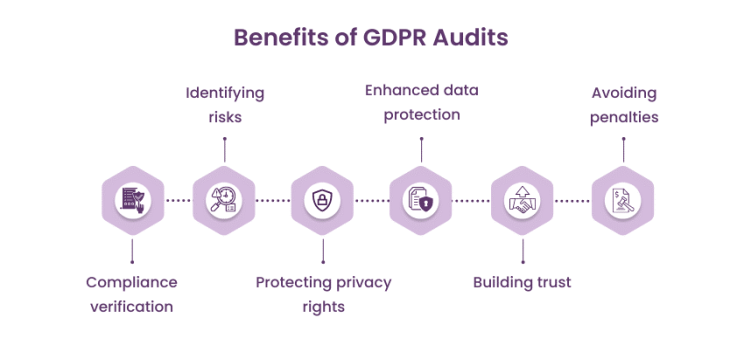
A detailed data audit involves a systematic approach to inventory data, map data flows, assess collection and processing practices, evaluate storage and retention policies, and ensure compliance with data sharing requirements. This comprehensive audit helps organizations identify areas for improvement and ensure compliance with GDPR and other data privacy laws, ultimately safeguarding personal data and building trust with data subjects.


Comments
Post a Comment