Understanding the Role of Consent Manager under the DPDP Act: Implications for the Healthcare Sector

The Digital Personal Data Protection (DPDP) Act 2023 marks a significant step in safeguarding personal data in India. One of the key elements introduced by this act is the concept of a Consent Manager. In the healthcare sector, where sensitive personal data is routinely handled, understanding and implementing the role of Consent Managers is crucial.

Overview of the DPDP Act 2023
The DPDP Act aims to protect the personal data of individuals and ensure their privacy. It mandates strict guidelines for collecting, processing, and storing personal data. For the healthcare sector, where the handling of sensitive personal data is inherent, compliance with the DPDP Act is not just a legal obligation but also a moral one.
What is a Consent Manager?
A Consent Manager, as defined by the DPDP Act, is an entity responsible for obtaining, managing, and tracking consent from data principals (patients). They ensure that consent is informed, specific, and freely given. In the healthcare sector, Consent Managers play a pivotal role in maintaining the integrity and confidentiality of patient data.
Comparison with Other Data Privacy Laws
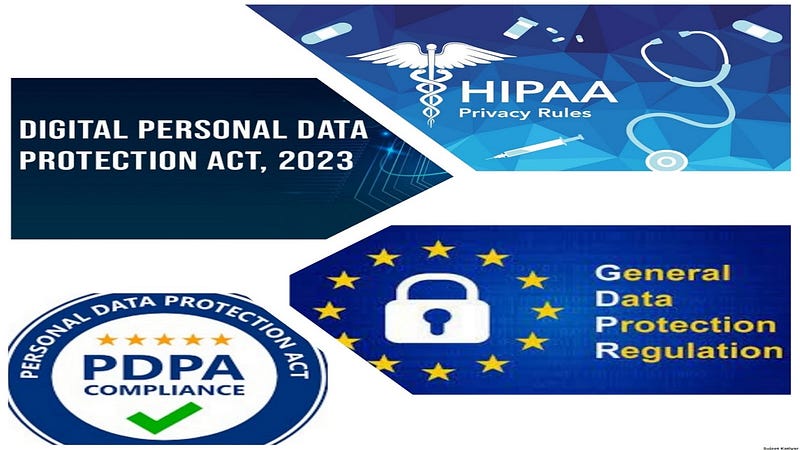
GDPR (General Data Protection Regulation):
- Consent Requirements: Both GDPR and DPDP require explicit, informed consent from individuals. GDPR also emphasizes the right to withdraw consent at any time.
- Scope and Applicability: GDPR applies to any organization processing the data of EU citizens, regardless of the organization’s location. DPDP is specific to Indian citizens and entities handling their data.
- Penalties: Both GDPR and DPDP Act impose significant penalties for non-compliance, GDPR penalties can be as high as €20 million or 4% of global turnover, and the maximum penalty under the DPDP Act is ₹250 million (250 crore INR).
CCPA (California Consumer Privacy Act):
- Consent and Data Rights: CCPA emphasizes the right of consumers to know what personal data is collected, to whom it is sold, and the right to opt-out of data selling. DPDP focuses on consent management and data processing regulations.
- Scope and Applicability: CCPA applies to for-profit entities doing business in California that meet certain thresholds. DPDP applies to entities processing personal data of Indian citizens.
- Penalties: CCPA has provisions for both civil penalties and a private right of action, whereas DPDP focuses on penalties enforced by the Data Protection Authority.
HIPAA (Health Insurance Portability and Accountability Act):
- Health Data Protection: Both HIPAA and DPDP provide frameworks for protecting health information, but HIPAA is specific to healthcare data and applies to covered entities in the U.S.
- Consent Management: HIPAA requires patient consent for data sharing and outlines specific rights related to health information. DPDP includes broader data protection principles applicable to all personal data.
- Penalties: HIPAA imposes civil and criminal penalties for violations, with tiers based on the level of negligence.
Implementing Consent Managers in Healthcare
Current Challenges: Managing patient consent in healthcare is challenging due to fragmented systems and lack of standardized procedures. Traditional consent forms are often inadequate in the digital age, where data is constantly shared and processed.
Steps for Implementation:
- Assess Current Practices: Evaluate how patient consent is currently managed and identify gaps.
- Select a Solution: Choose a consent management solution that integrates with existing healthcare systems.
- Train Staff: Ensure that healthcare providers understand the importance of consent and how to use the new system.
- Integrate and Monitor: Implement the system and continuously monitor compliance and efficiency.
Benefits of Effective Consent Management
For Patients: Effective consent management improves transparency and control over personal data, enhancing trust in healthcare providers.
For Healthcare Providers: It ensures compliance with regulations, reduces the risk of data breaches, and fosters better patient relationships.
Challenges and Considerations
Technical Challenges: Implementing new systems can be technically challenging. Healthcare providers need to ensure that the consent management system is robust and integrates seamlessly with existing IT infrastructure.
Legal and Ethical Considerations: Managing patient consent involves navigating complex legal and ethical landscapes. Healthcare providers must ensure that they are not only compliant with the law but also upholding the highest ethical standards in protecting patient data.
Conclusion
The role of Consent Managers under the DPDP Act is critical in the healthcare sector. By implementing effective consent management practices, healthcare organizations can ensure compliance, protect patient data, and build trust with their patients. It is imperative for healthcare providers to proactively adopt these practices and stay ahead in the data protection landscape.
Call to Action
Healthcare organizations should start evaluating their consent management practices and consider implementing a Consent Manager to align with the DPDP Act. By doing so, they can enhance patient trust, ensure compliance, and protect sensitive healthcare data.


Comments
Post a Comment